
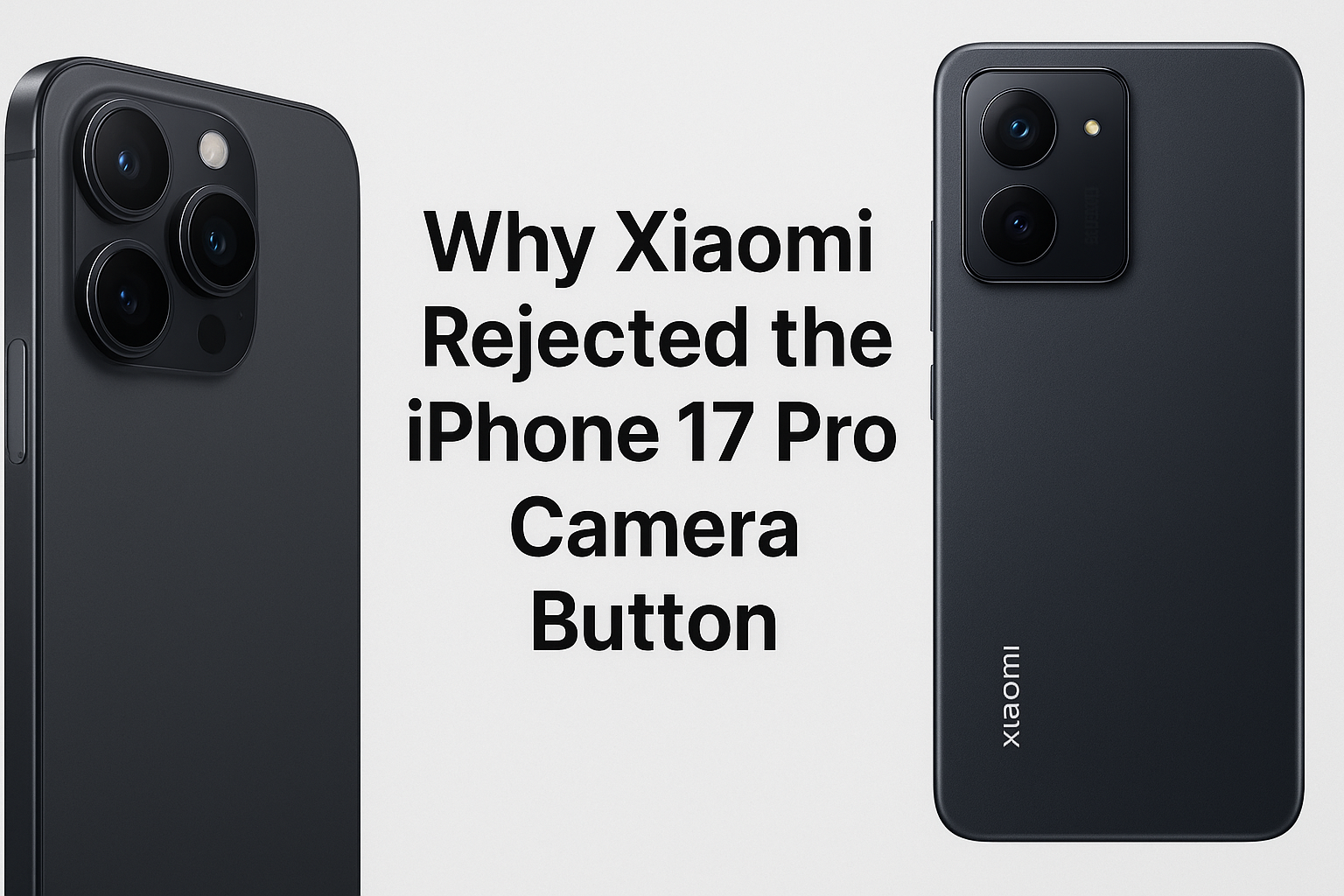
Why Xiaomi Rejected the iPhone 17 Pro’s Camera Button for the Xiaomi 17
Apple’s upcoming iPhone 17 Pro has generated huge excitement, largely because of one standout feature a dedicated camera shutter button built directly into the frame of the device. While many fans quickly expected Android competitors to copy the idea, one brand made a different choice: Xiaomi.
The Xiaomi 17 series is shaping up to be one of the most powerful Android flagships of the year, but Xiaomi made a deliberate decision not to adopt the iPhone-style camera button. Instead, the company is focusing on a different direction one that aligns with Xiaomi’s design philosophy, user behavior data, and long-term strategy.
Here are the key reasons Xiaomi rejected the iPhone 17 Pro’s camera button.
1. Xiaomi Believes Software Beats Hardware for Camera Control
Xiaomi has invested heavily in computational photography. According to insiders, the brand believes that software-driven camera controls are faster, smarter, and more customizable than a physical shutter button.
- Physical buttons offer only one or two actions (half-press or full press).
- Xiaomi’s software gestures allow multiple controls: zoom sliders, focus peaking, quick switching, long-press shortcuts, etc.
The company’s imaging team reportedly said that adding a fixed hardware control can actually limit their software innovation especially in an era of AI-powered photography.
2. A Camera Button Makes Phones Bulkier — Xiaomi Wants a Slimmer Flagship
Apple’s new camera button requires extra internal space, adding to the phone’s thickness and reducing room for other components like cooling systems and battery cells.
Xiaomi is currently pushing for a super-slim yet powerful flagship, and engineers concluded that:
- The button hardware adds mechanical complexity.
- It breaks the clean, minimalistic frame design.
- It affects IP rating and structural rigidity.
- Xiaomi wants the Xiaomi 17 to feel light, smooth, and seamless, something a protruding camera button might compromise.
3. Xiaomi Found That Most Users Don’t Use Physical Camera Buttons
Internal user testing across key markets (China, India, EU) reportedly showed surprising results:
- Over 82% of Xiaomi users prefer tapping the screen to take photos.
- Less than 10% used volume-button shutter controls consistently.
- Many said a physical shutter button feels “old-school.”
Xiaomi concluded that user demand simply doesn’t justify redesigning the frame for a feature only a small percentage would appreciate.
4. A Dedicated Camera Button Conflicts With Gesture-First Design
The Xiaomi 17 series is built around gesture navigation, AI camera shortcuts, and smart touch zones on the side rails. Adding a fixed mechanical shutter button would interfere with:
- Edge-swipe gestures
- Screenshot shortcuts
- Volume button positioning
- The “AI Touch Zone” on the side frame
To maintain a clean, uninterrupted user experience, Xiaomi chose flexibility over hardware gimmicks.
5. Xiaomi Prioritizes AI Camera Enhancements Instead
Unlike Apple’s hardware-first approach, Xiaomi is betting on AI-first photography.
The Xiaomi 17 will feature:
- AI Scene Optimization 3.0
- Real-time AI object tracking
- Auto-composition suggestions
- Intelligent stabilization
- Automatic lighting adjustments
Xiaomi believes these upgrades deliver more real-world value than adding a physical shutter button.
6. Xiaomi Wants a Unique Identity — Not an iPhone Clone
While some brands rush to imitate Apple’s new features, Xiaomi is deliberately building a distinct design language.
By rejecting the camera button, Xiaomi signals:
- It won’t copy Apple blindly
- It prioritizes purposeful innovation
- It prefers “smart design” over design trends
- This aligns with Xiaomi’s broader strategy: premium but different.
7. A Camera Button Would Affect Accessory Compatibility
Adding a new side button disrupts:
- Case designs
- Magnetic mounts
- Gimbal clamps
- Third-party camera grips
Xiaomi works closely with accessory makers, and engineers concluded that this change would break the accessory ecosystem for very minimal benefit.
Final Thoughts: Xiaomi Chose Practicality Over Hype
The iPhone 17 Pro’s camera button might become one of Apple’s biggest talking points, but Xiaomi is taking a more measured approach. By focusing on AI imaging, slim design, and software versatility, Xiaomi is avoiding a feature that could introduce more problems than benefits.
In the end, Xiaomi’s decision shows one thing clearly:
Innovation isn’t about copying trends — it’s about understanding what truly improves the user experience.