Telecom Sector Shows Resilience Amid Tariff Hikes, Infrastructure Push
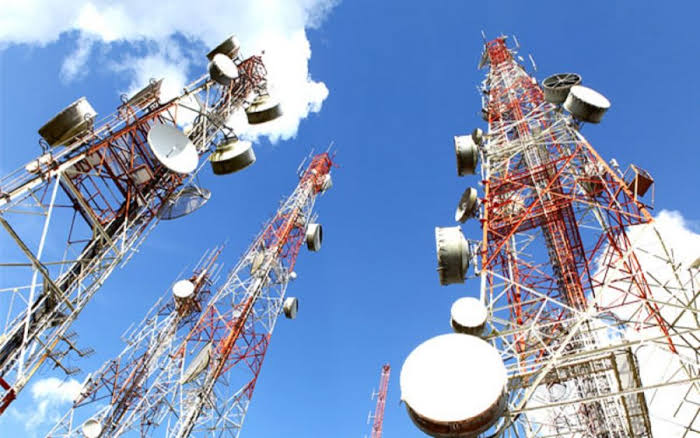
Nigeria’s information technology and telecommunications sector remained a critical pillar of economic activity in 2025, sustaining momentum despite inflationary pressures, foreign exchange volatility and rising operating costs.
While operators navigated a tighter macroeconomic environment, the sector continued to drive digital inclusion, enterprise productivity and service innovation, reinforcing its strategic importance to national development.
Data from the National Bureau of Statistics (NBS) showed that the ICT sector maintained a double-digit contribution to Gross Domestic Product (GDP) during the year, consolidating its position as one of the strongest non-oil performers.
Telecommunications, broadband services, data infrastructure and enterprise connectivity accounted for the bulk of sector output, even as consumer purchasing power weakened.
The Nigerian Communications Commission (NCC) noted in its 2025 industry performance report that data services remained the primary growth driver.
According to the regulator, “Demand for data continued to expand in spite of economic headwinds, reflecting the centrality of digital services to business operations, remote work, fintech and social engagement.”
The first quarter of 2025 marked a notable shift for telecom subscribers, as Nigerians experienced increases in the cost of mobile data and broadband services. Major network operators adjusted data tariffs upward, citing inflation, foreign exchange constraints, rising diesel prices and increased network operating expenses.
Meanwhile, Industry estimates indicate that average data prices rose by between 10 and 20 per cent in Q1 2025, depending on the operator and service plan. The adjustments triggered public debate on affordability particularly for low-income users and small businesses that rely heavily on mobile internet for daily operations.
While acknowledging subscriber concerns, the NCC said, pricing developments occurred within a challenging cost environment. “The sustainability of network investments must be balanced with consumer protection, especially in the face of rising operational and infrastructure costs,” the Commission stated.
Providing industry context, the chairman of the Association of Licensed Telecom Operators of Nigeria (ALTON), Gbenga Adebayo, said the tariff adjustments were driven by unavoidable economic realities rather than opportunistic pricing.
“The telecom industry has been under immense pressure from FX volatility, rising energy costs, equipment importation challenges and multiple taxation, Operators cannot sustain quality of service and network expansion if costs continue to rise without corresponding pricing adjustments,” Adebayo said.
He added that telecom infrastructure remains capital-intensive and highly sensitive to macroeconomic shocks.
If networks collapse or investment stalls, the entire digital economy suffers. What the industry seeks is a balanced, sustainable framework that protects consumers while allowing operators to remain viable,” he stressed.
However, industry analysts and telecom policy experts observed that the Q1 tariff adjustments reflected cost-push pressures across the economy. Just as they opined that issues related to the sector were not an isolated telecom issue. Inflation, diesel prices and FX pressures affected all infrastructure-heavy sectors with Telecom operators having limited room to absorb these shocks.
From a data perspective, a data analyst/digital economy observer, Oladimeji Edun, remarked that higher prices did not significantly dampen usage.
“Despite the price increases, data consumption continued to rise, particularly among enterprise users and urban subscribers. This shows that data has become a necessity rather than a luxury in Nigeria’s economy,” Edun said.
Moreover, Nigeria’s telecoms landscape in 2025 continued to be shaped by dominant players such as MTN Nigeria and Airtel Nigeria whose investments in network capacity, fibre backhaul and enterprise services helped stabilise performance in the face of cost pressures. MTN’s strategic entry into fibre-to-the-home (FTTH) and fixed broadband intensified competition in both enterprise and residential connectivity, while Airtel focused on improving mobile data coverage and service consistency in high-density urban corridors.
Equally significant were the renewed efforts of Glo which intensified its fibre rollout and mobile broadband optimisation across major cities, and Etisalat Nigeria’s legacy brand now operating as T2, which embarked on a rebranding and network refresh strategy aimed at restoring consumer confidence and improving the quality of mobile connectivity. Industry observers say the rebranding to T2 represents more than a name change, but a deliberate attempt to reposition the company as a competitive data-centric operator in an increasingly crowded market.
Together, MTN, Airtel, Glo and T2 have adopted a more aggressive posture in addressing network congestion, dropped calls and data speed complaints, deploying additional base stations, upgrading fibre backhaul capacity and investing in customer experience platforms.
According to some reports, nationwide broadband penetration did not accelerate as rapidly as earlier targets, 2025 recorded measurable progress was recorded in metro fibre deployment, last-mile connectivity and enterprise-focused broadband solutions. As these Investments were largely concentrated in campuses, estates, business districts and event hubs where demand for reliable, high-capacity connectivity remains strongest.
The NCC observed that “the transition toward fibre-based access networks and managed services is improving quality of service and network resilience, particularly for enterprise and institutional users.”
“The continued expansion of data across Lagos, Abuja and other strategic locations was one of the most significant ICT developments of the year. These facilities support local data hosting, cloud services and content delivery, reducing latency and reliance on offshore infrastructure,” said. vice president, Stephen Albert.
Industry stakeholders allude that data centres are now central to Nigeria’s digital economy, supporting fintech platforms, e-commerce, government digital services and enterprise IT operations, while advancing data sovereignty and cybersecurity objectives.
Commenting on the sector, vice president, Sales, Growth & Retention at OneData, said, “2025 tested the resilience of the industry. Rising operational costs, FX volatility and infrastructure challenges forced operators to be more deliberate. Our focus on efficiency, bundled solutions and customer retention helped us maintain stability and grow in targeted segments.”
Within this operating environment, the internet wireless providers, noted that they experienced a steady and improved performance in 2025, outperforming previous years within targeted segments. Even as the company reported approximately 68 per cent year-on-year growth in customer acquisition, driven by enterprise connectivity, campus solutions and strategic partnerships.
Albert noted that investments in FTTH expansion, proactive network monitoring and internal process improvements strengthened service reliability, while targeted marketing and customer engagement boosted brand visibility.
While, the outlook for Nigeria’s IT and telecoms sector in 2026 remains cautiously optimistic. Demand for data, cloud services, artificial intelligence-enabled platforms and enterprise connectivity is expected to grow across education, healthcare, finance and events.
Consequently, stakeholders warn that regulatory clarity, FX stability and infrastructure protection will determine how much of this potential can be unlocked.