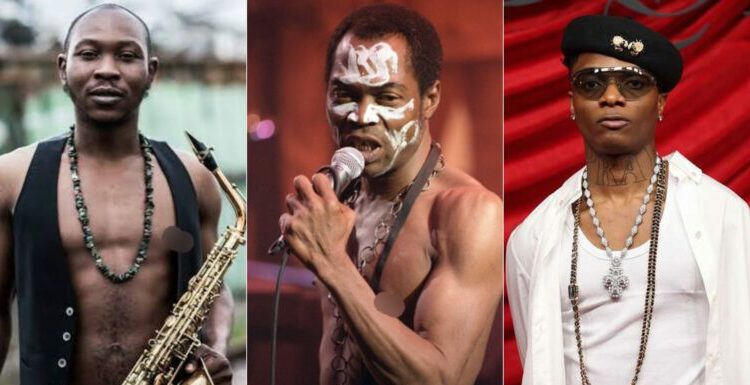
Seun Kuti vs Wizkid: Debate Over Music Supremacy Sparks Reactions Across Nigeria
A fresh wave of debate has swept across Nigeria’s entertainment space following comments linked to Afrobeat singer Seun Kuti and global Afrobeats star Wizkid, igniting conversations about music supremacy, legacy, and influence in the industry.
The discussion, which started on social media, quickly gained momentum as fans of both artistes exchanged views over who truly holds greater musical impact. While some argue from the perspective of cultural heritage and originality, others point to global reach, streaming numbers, and commercial success.
Seun Kuti, son of Afrobeat legend Fela Anikulapo-Kuti, is widely respected for preserving and advancing the traditional Afrobeat sound that carries strong political and social messages. His music continues the legacy of activism, live instrumentation, and African consciousness that his father pioneered decades ago.
On the other hand, Wizkid represents the modern wave of Afrobeats that has taken African music to international stages. With chart-topping hits, global collaborations, and multiple international awards, Wizkid’s influence is often measured by numbers, global recognition, and the expansion of Afrobeats into mainstream pop culture worldwide.
Observers note that the comparison between both artistes may be misplaced, as they represent different generations, styles, and missions within the Nigerian music industry. While Seun Kuti’s work is rooted in heritage, activism, and live Afrobeat performance, Wizkid’s artistry thrives on contemporary sounds, digital success, and global appeal.
Industry analysts suggest that rather than a rivalry, the conversation reflects how Nigerian music has evolved from traditional Afrobeat to modern Afrobeats, both of which have contributed significantly to the country’s cultural export.
Fans continue to debate passionately online, but many agree that both artistes have, in their own ways, strengthened Nigeria’s position as a global music powerhouse.
As the conversation trends, it highlights not just personal comparisons but the broader story of how Nigerian music has transformed across generations while retaining its African identity.