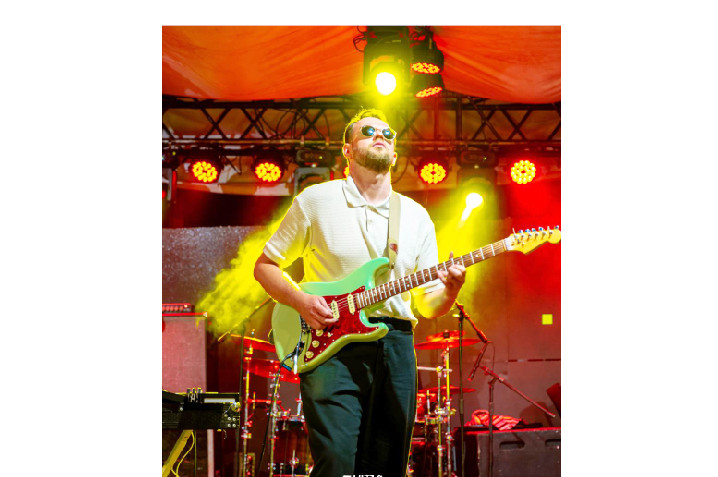
Nigerians Are Spontaneous & Respond To Sounds Very Powerfully, Says Norwegian Musician, Aschim
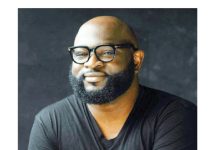
Norwegian musician Audun Aschim has described Nigerians’ spontaneity, their powerful response to sounds, and the energy behind their multi-layered Afro music as endless sources of fascination for him.
Audun first visited Nigeria in 2024, as part of a performing duo with Norwegian-based British actress Kate Pendry. Both facilitated a workshop organised by Jos Repertory Theatre (JRT) to adapt the work of Norwegian playwright and father of modern theatre, Henrik Ibsen’s ‘The Master Builder’ into a Pidgin Language radio series.
During the trip, Audun and Pendry performed ‘Cripplewolf’, a uniquely contemporary piece of theatre, where Pendry’s impressive voice acting, supported by Aschim’s music soundscapes, evoked a clearer visual of the story than any physical acting or props ever could.
It is from this background musical dramaturgy, and the big band music genre that Aschim came into the Nigerian music scene. Imagine his surprise at the instant connection he felt with Nigerians and Afro music. The result was his return to Abuja to headline Salako’s Afro Jazz Festival the same year. He would visit Lagos in early 2025 for a month and later this year, in November/December, to perform in 7 concerts.
“I don’t know if it’s something in the water, but there’s just something with Nigeria that distinguishes her music from other African countries. The music is so full of life and multi-layered.
“I think Nigerians respond to sounds, as listeners, very powerfully. The response to ‘Cripplewolf’, a very culturally-specific type of story, with musical references that I thought were very different from those in Nigeria, was even better than what we got from Europeans.
“Perhaps it’s because of the inherent symbolisms and spiritualism among the Nigerian cultures – from the tribes’ music to Afro music. I love Yoruba, Hausa and Igbo traditional music. Nigerians respond so strongly to sounds and atmosphere, both of which are layered in your music.”
The resulting impact is a two-way communication whereby Aschim need not change his content for the Nigerian audience – like his ‘Afro Nordic Concert’ pieces in Abuja; but also, collaborate with Nigerian artistes to create unique music – as in his upcoming album, which will celebrate his love for Nigerian music.
“It is about the energy beneath everything. The energy of this album has to make sense to me. With music, everything is allowed, but there is something about respect for the music. Hence, I am not trying to make Nigerian music; instead, I collaborate with Nigerian artistes.
“Alongside my Nigerian producer, we are either composing together or feeding off one another. He is responsible for the Nigerian perspective of music, and I am responsible for the Norwegian aspect.”
The album will feature instrumental pieces from Aschim, in addition to at least five collaborative songs/music with a few of his favourite Nigerian artistes that he’s met and worked with – including the founder of Truth Village, Dotie the Deity, Tosin Salako, Etuk Ubong, and Abuja-based Hausa music artiste, Firstklass.
“The aim is to release the album in 2026. I want to reflect on my experiences in Nigeria. The album will be a celebration of my love for the Nigerian music scene.”
Aschim’s fascination with Nigeria is grounded in reality rather than naivety. He’s experienced his ‘this is Nigeria’ moments. To illustrate, he has witnessed the intimidation tactics of the Nigerian police while held up in traffic. He has attended a concert where the supervisor tried to make him pay 150 litres of petrol, and faced a kidnapping anxiety when the taxi driver scheduled to pick him up at the airport, outsourced his ride to another driver without his knowledge. But the positives, he said, far outweigh the negatives.
Although Aschim has a busy 2026 planned, which kicks off with a show in New York with his performing partner Pendry this January, and a concert in South America in February, he plans to return to Nigeria in the spring (April). There is also his and Pendry’s Pidgin Language Radio Series adaptation of Henrik Ibsen’s ‘The Master Builder’, tentatively set for 2026, which will be broadcast to a 9-million-strong northern Nigerian audience.
“It will be the biggest Ibsen production if all goes according to plan. It’s a long-term project, but we are determined to do it. So, I am thinking of Nigeria long-term,” concluded Aschim.