Medicare Premium Increase Reduces Social Security COLA for 2026: What Retirees Need to Know
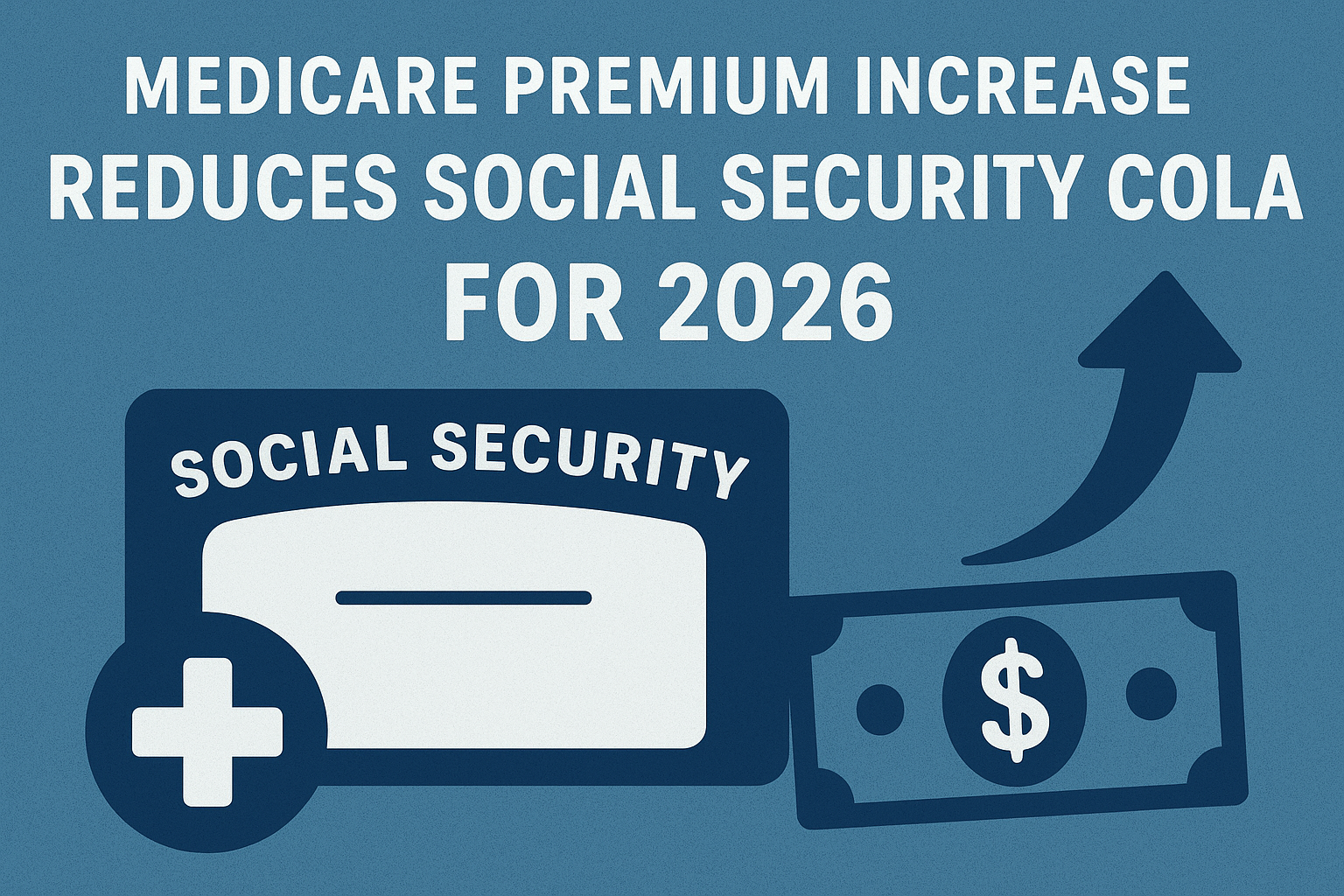
Millions of seniors are bracing for a financial squeeze in 2026 as rising Medicare premiums are set to eat into next year’s Social Security Cost-of-Living Adjustment (COLA). While Social Security benefits will go up in 2026, the Medicare Part B premium hike is expected to offset much of that increase—leaving retirees with smaller net checks.
Here’s a complete, easy-to-understand breakdown of how the changes may impact your wallet, why premiums are rising, and what seniors can do to protect their income.
What Is Happening With Social Security COLA in 2026?
The Social Security Administration adjusts benefits annually based on inflation. For 2026, early projections indicate a moderate COLA increase, far lower than the historic boosts seen in 2022 and 2023.
However, even this modest raise is now threatened by rising Medicare costs.
Most retirees have their Medicare Part B premiums deducted directly from their Social Security checks, meaning any increase reduces take-home benefits.
Why Medicare Premiums Are Expected to Rise
Medicare premiums generally increase due to:
- Higher healthcare costs nationwide
- Increased spending on outpatient services
- Rising prescription drug expenses
- Long-term pressure on Medicare trust funds
The 2026 hike is expected to be one of the more noticeable increases in recent years, placing additional pressure on fixed-income seniors.
How the Medicare Increase Offsets Your COLA
Here’s how the numbers play out for many seniors:
- Social Security benefits go up due to COLA
- Medicare premiums also go up
- But the premium increase is taken out of the raise
- Leaving beneficiaries with little to no net gain
For some retirees, the increase may fully absorb their COLA meaning no extra monthly income at all.
Who Will Be Affected the Most?
The following groups may feel the financial impact more strongly:
1. Low-Income Seniors
Those relying solely on Social Security may see little improvement in their financial situation.
2. Retirees With High Healthcare Needs
Higher utilization of outpatient services will cost more under rising premiums.
3. New Medicare Enrollees
New beneficiaries do not benefit from special protections like the hold harmless rule.
The “Hold Harmless” Rule: Does It Protect You?
The hold harmless provision prevents Medicare Part B premium increases from reducing your Social Security benefits.
However:
- It does not apply to everyone
- It does not stop premiums from absorbing your COLA
- It simply prevents your benefit from going negative
- Many retirees will still see their raise shrink significantly.
What Seniors Can Do to Manage the 2026 Income Squeeze
1. Review Your Medicare Plan for 2026
Many seniors can save money by comparing Part D drug plans or switching Advantage plans.
2. Explore Medicare Savings Programs
These programs help eligible seniors pay for premiums, deductibles, and co-pays.
3. Adjust Your Monthly Budget Early
Prepare now for a smaller-than-expected Social Security check in January 2026.
4. Consider Supplemental Income Options
Small online earnings—freelancing, remote tasks, content creation—can help offset the impact.
5. Monitor Official Announcements
Watch for final COLA and Medicare premium figures from the SSA and CMS.
Final Thoughts: A Smaller Raise, Higher Costs
The Medicare premium increase is a serious concern for retirees as it dilutes much of the Social Security COLA for 2026. While benefits will technically rise, most seniors may not feel the difference when their Medicare deductions are applied.
Planning ahead reviewing healthcare options, adjusting budgets, and understanding policy changes will be key to staying financially stable in 2026.